(Translation from this 2017 post)
On Tuesday, February 21st, I had the opportunity to attend the talk given by IESE, “The Keys to Self-Motivation at Work” by Pablo Maella. It was a basic and clear talk that covered, in my opinion, a good part of what current psychology knows about the topic. For this reason, it will be impossible to cover all the threads offered in just one post, so we will focus on a few. He structured the talk into ten points:
- Accept reality and others as they are.
- Know and accept ourselves, with our strengths and weaknesses.
- Don’t complain.
- Be grateful and appreciate what we have.
- Adopt a positive attitude toward events.
- Set relevant challenges and goals.
- Give the greatest meaning possible to everything we do.
- Be proactive rather than passive.
- Put passion into what we do, and when we lack it, lean on responsibility.
- Be tenacious and perseverant in achieving our goals.
Before commenting on any of these points, I’ll address the question, often asked with a “yeah right” tone: “And why do I need to motivate myself? So that the company can benefit even more from my work?” The answer is “Mmmmm. Nope. The one who benefits most from self-motivation is you. The company does too, but especially you.” I know I sound like a corporate self-help book, yikes, but I hope to make a case for this idea throughout the post.
«Know and accept ourselves, with our strengths and weaknesses.» The metaphor the speaker chose to illustrate this point seemed particularly apt to me. The physical qualities that make a runner a good sprinter, powerful muscles with explosive capacity (i.e., predominantly white, type II, fast-twitch muscle fibers), are precisely what make them a poor long-distance runner. And vice versa, the physical qualities of a good distance runner, long and highly durable muscles (i.e., predominantly red, type I, slow-twitch muscle fibers), make them worse sprinters. Applied to work, we can understand that strengths and weaknesses are two sides of the same coin: if I am cautious and analytical, I may also be slower in making decisions; if I’m good at making quick decisions, I might not always consider all scenarios; if I’m a bold and decisive trader when opening positions, I may overlook the risks I’m taking; if I’m risk-averse, I will likely analyze the pros and cons of each investment before deciding. In other words, for those of us who tend to focus on our weaknesses, the idea is to view them kindly, as they may well be feeding our strengths. And conversely, for those of us who tend to focus on what we do well, the idea is not to lose sight of the weaknesses our strengths imply.
This point ties in nicely with the first: «Accept reality and others as they are.» If, as a boss, I insist that the sprinter on my team runs marathons, not only am I undermining their self-esteem, but I’m also failing to optimize the team’s performance. If, as a colleague, I expect others to be the way I want them to be, I become blind to the qualities they are already demonstrating before me.
Speaking of blindness, let’s move on to the third point, «Don’t complain,» while keeping the previous one in mind. In the context of “accepting reality and others as they are,” the speaker cited the First Noble Truth of Buddha, modifying it a bit, I assume, to better fit the corporate context: “Frustration is inherent to human nature.” I have a post pending on the Four Noble Truths, but for now, let’s focus on the first: suffering exists. Dukkha is a Pali word we can translate as suffering, dissatisfaction, and, why not, frustration. In human existence, dissatisfaction/suffering/frustration is inherent. To expect otherwise is unrealistic. So, accepting that there will always be things to complain about is a first step to not getting stuck in them. “There is no perfect job, no perfect colleagues,” Maella emphasized.
Attention is the focus that illuminates reality, and since reality includes everything (goodness, evil, efficiency, laziness, beauty, ugliness), it is in our hands, with some training, to illuminate one aspect or another. Quoting William James: “Each of us literally chooses, by his way of attending to things, what sort of universe he shall appear to himself to inhabit.” In each complaint, we are choosing what part of reality to see and, therefore, what part not to see.
Cultivating attention is one of the most useful activities we can practice. Returning to William James: «[…] the faculty of voluntarily bringing back a wandering attention over and over again is the very root of judgment, character, and will. […] And education which should improve this faculty would be the education par excellence.” In another post, we’ll talk about meditation. Related to this, Maella cited the now-classic study, “A wandering mind is an unhappy mind,” in which the authors find that most people are not thinking about what they are doing most of the time and that this fact positively correlates with dissatisfaction.
Let me return for a moment to the point about knowing and accepting ourselves. In fact, as you can see, rather than a linear list where one point is concluded before moving on to the next, it would be more useful to think of a network, where all the points are interconnected. Returning to the idea of acceptance, but also related to being proactive, let’s be careful not to fall into the magical thinking that is surprisingly taking root nowadays, like “The Secret,” which, to summarize crudely, says that the universe will give you what you want if you know how to ask for it correctly. At this point in the talk, Pablo Maella wisely recommended that we accept our limitations: “If you want, can you?” The answer is “No,” or better, “not always.” You can’t fly, no matter how much you want to, and there is only one president of Caixabank. This doesn’t mean that stepping out of your comfort zone isn’t good—it is—but you should step out with realistic expectations.
This naturally leads us to the point about setting relevant challenges and goals. This point deserves an entire book. In Man’s Search for Meaning, a delightful book by the way, the author, Viktor Frankl, recounts his experience in a Nazi concentration camp. From that experience, logotherapy, or existential therapy, was born, which is based on helping clients find the “meaning of their life.” Some threads on what science knows about happiness can be found in this post, and a post on eudaimonia is still pending.
In summary, as a quote falsely attributed to Buddha and more accurately to Carrie Fisher, Princess Leia, says: “Resentment is like drinking poison and then waiting for the other person to die.” The same can be said about the lack of motivation.
You know I like to end posts with a personal anecdote. Today’s will be about self-motivation at work, of course. And it’s an anecdote I find difficult to share because it takes me back to a bad time, but I’m also excited to share it because I think it illustrates the power of self-motivation very well. A few years ago, I felt my work was underappreciated at all levels, including compensation. I came to work thinking the rest of my professional life would have the same lack of meaning. But, as situations can always worsen, in that context, my boss asked me to take on a new task. In my department, we have a morning meeting every day that summarizes what happened the previous day in the financial markets. The task was to be the backup for the person who usually handles it. My attention illuminated certain aspects of the task: it was very demanding—I needed to get up to speed on topics I knew very little about; it was very exposed—it’s done over the phone, and many people connect, so if I made a mistake, it would have a name and a face; but above all, it increased my workload without any financial compensation. I was outraged. My line of thinking was something like this: “Why do I have to do it? Isn’t that just great?! They don’t pay me what I deserve, and they expect me to work more. Let someone who gets paid more do it!” Sounds familiar, right? Who hasn’t felt unfairly treated at work? In that meeting, I almost lost my composure: I told my boss I didn’t want to do it, and after a back-and-forth where I ended up saying that if he ordered me to, I’d have no choice, he, obviously, ordered me to do it. And there I was, stuck with the task.
At that moment, I opened my “toolbox” for tough situations and pulled out ELSA. ELSA is an acronym for a very useful technique: Embrace, Let Go, Stop, Act.
- Embrace the situation. You’re going to do the task no matter what: whether you like it or not, whether it’s fair or not, whether it’s high-exposure or not, you’re going to do it.
- Let go of all thoughts and feelings about it. Let go of the resentment, the anger, the self-pity, the sense of injustice—let it all go.
- Stop. I stayed completely silent and still. As still as I could be. Mentally still. Physically still. No thinking, no talking about it, no doing anything. Silence …
- Act. And in that silence, another idea timidly appeared. What if I set out to do the task as well as possible? What if I saw it as an opportunity to learn beyond my usual scope? What if I tried to make these “morning briefings” useful and interesting for those listening? The idea gradually gained strength over time. And I acted. I acted to achieve my goal: to make the briefings as complete and interesting as possible without expecting anything in return.
And you know what? Today, it is one of the most satisfying, interesting, and fun tasks I do. It wasn’t easy—I had to read a lot, ask many questions, and overcome the fear of public speaking. But how lucky I was to be given that task, and how lucky I was to know ELSA. Was my boss happy with the results? Of course. Did it change my external professional situation? No. But suddenly, everything made sense to me. I was the one who benefited the most.
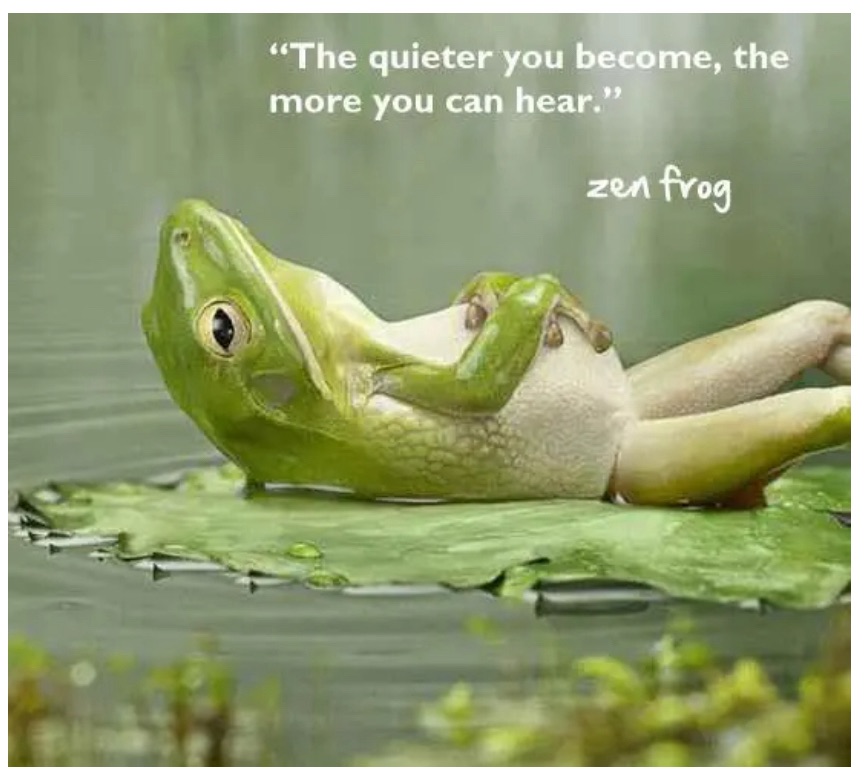
In summary, I’m not saying ELSA always works; sometimes we won’t know how to apply it, other times it won’t have such a happy ending. But thinking in terms of risk-reward, of cost-benefit, it’s always worth considering.
As always, I hope this post is at least minimally useful to someone at some point.
«What you resist persists. What you accept transforms you.» — Carl G. Jung.
 Epimeleia Barcelona